



BotSpot
BotSpot connects your WordPress site to the BotSpot platform. It syncs selected published content to BotSpot and renders the resulting appendix HTML and JSON-LD structured data on your public pages.
The plugin is designed for sites that use BotSpot as a software-as-a-service platform for content enrichment and structured data generation. A BotSpot account and access key are required before content can be synced or rendered.
Features include:
- Sync selected post types, including posts and pages.
- Fetch and render appendix HTML from BotSpot.
- Emit JSON-LD structured data in the page head.
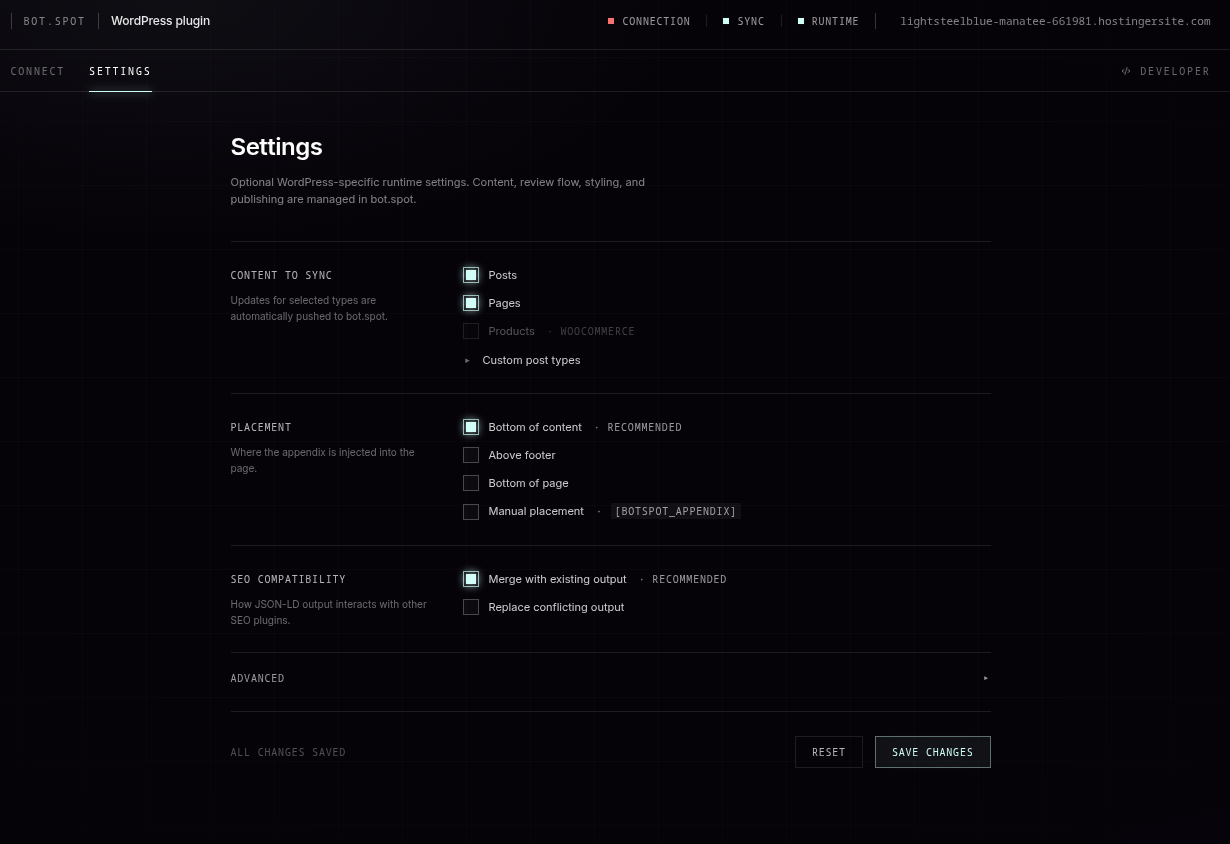
- Choose automatic placement, footer-aware placement, or manual placement with a shortcode.
- Add appendix placement with the
[botspot_appendix]shortcode or the BotSpot Appendix block. - Cache rendered content with WordPress transients.
- Retry failed syncs with WP-Cron.
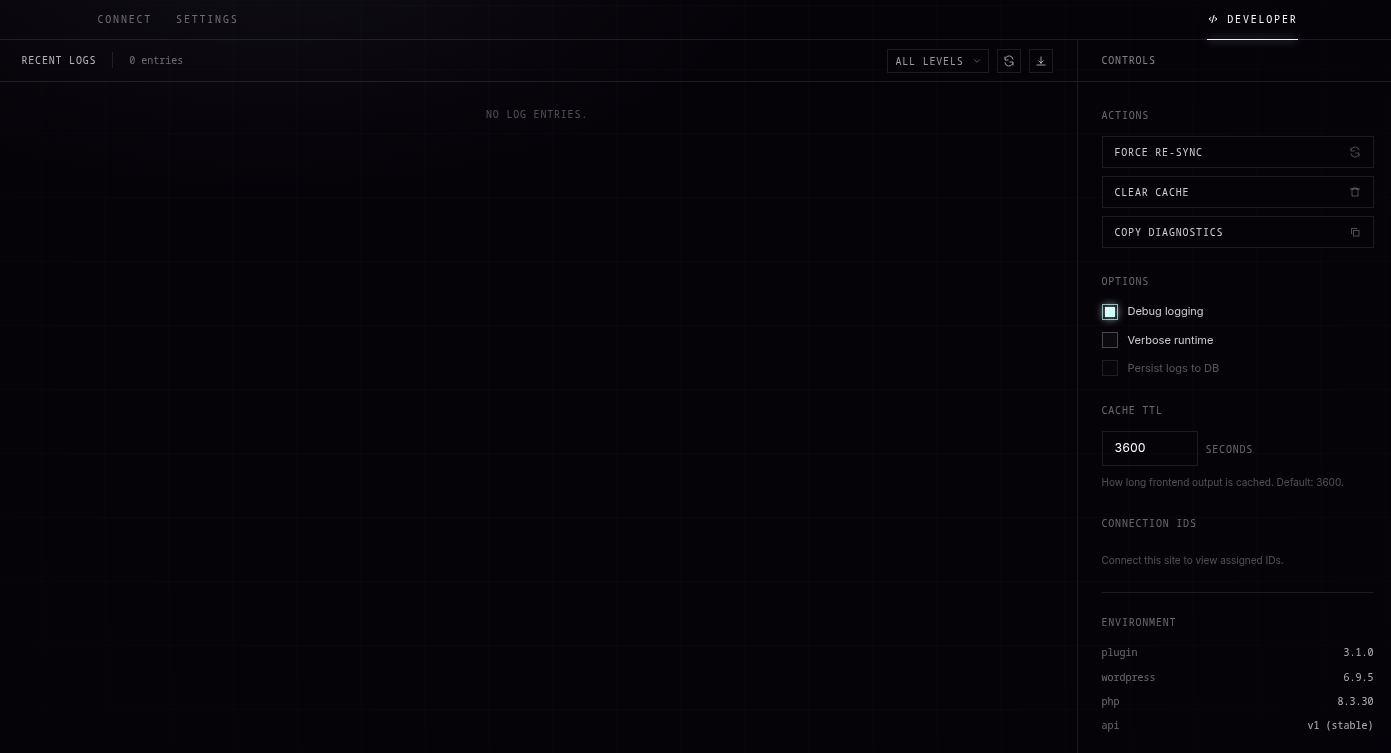
- View connection, sync, runtime, and diagnostic information in the WordPress admin.
This plugin does not include premium-only WordPress plugin code. Any paid plan or account requirement applies to the external BotSpot service, not to locked code inside the plugin.
External Services
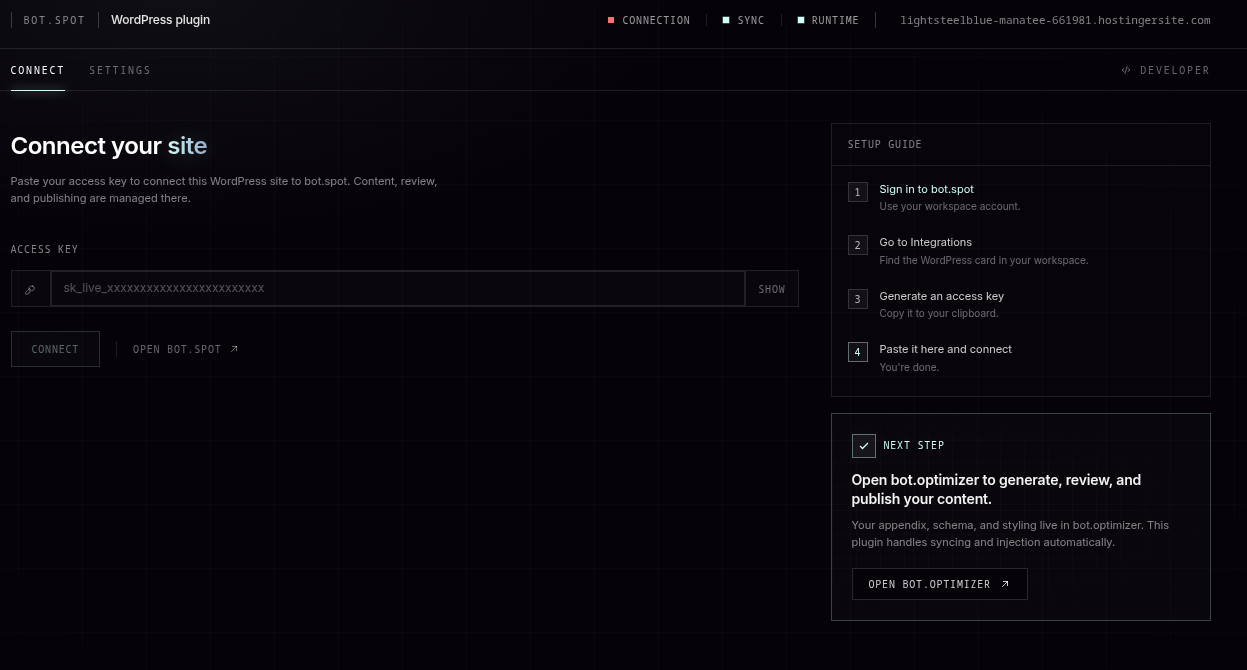
This plugin connects to BotSpot services in order to provide its core functionality. The plugin will not sync site content until a site administrator enters a BotSpot access key and connects the site.
Service provider: BotSpot
Service URLs used by production builds:
https://platform.bot.spot– BotSpot dashboard used to create and manage access keys.https://locus-api.bot.spot– BotSpot API used for site registration, content sync, appendix rendering, JSON-LD rendering, and enrichment webhooks.
Terms of service: https://bot.spot/terms
Privacy policy: https://bot.spot/privacy
Data sent to BotSpot may include:
- Site URL, site name, and webhook URL during connection.
- Selected published content, including title, content, excerpt, permalink, post type, status, author display name, language, publish/update dates, categories, tags, featured image URL, and existing source JSON-LD during sync.
- The current page path, site origin, and API authentication headers when fetching rendered appendix content or JSON-LD.
BotSpot may send webhook requests back to the WordPress site to update enrichment status, clear local caches, and push configuration changes. These requests are authenticated with an HMAC signature.
Privacy
Content sync and rendering require an administrator to connect the site with a BotSpot access key. After connection, the plugin can automatically send selected published content to BotSpot when that content is published or updated.
After connection, the BotSpot platform may push configuration changes to the plugin via webhook, altering which post types sync or display enriched content. Administrators can review current settings in the Settings tab. These settings are managed in the BotSpot dashboard.
Site administrators can view which post types are synced and which post types receive injected output from the plugin settings screen. Disconnecting or removing the access key stops new authenticated API calls from succeeding.
The plugin stores BotSpot access credentials and sync metadata in the WordPress database. On uninstall, plugin options and plugin-owned post metadata are removed.
The plugin does not add BotSpot attribution links or credits to public pages by default. Service-rendered appendix output may include BotSpot-managed branding or attribution only if that behavior is configured in BotSpot.
Source and Build
The plugin source is distributed as human-readable PHP, JavaScript, and CSS. Runtime PHP dependencies are installed with Composer and prefixed during release builds with Strauss to avoid dependency conflicts in WordPress environments.
Production release archives are generated with ./build.sh or TARGET=production ./build.sh. The generated ZIP includes the WordPress.org readme.txt, the plugin license, third-party license notices, and the Strauss-prefixed runtime dependency files needed by the plugin.
Third-Party Licenses
This plugin bundles or generates runtime code from the following GPL-compatible packages:
jaybizzle/crawler-detect– MIT License.monperrus/crawler-user-agents– MIT License.- Composer autoload/runtime metadata and Strauss-prefixed generated dependency files – see
THIRD-PARTY-LICENSES.txtin the plugin package.
Details
Related plugins
Plugins that also contain the tag ai
SEOPress – On-site SEO & Analytics

AI Engine – The Chatbot, AI Framework & MCP for WordPress

GetGenie – AI Content Writer with Keyword Research & SEO Tracking Tools
SEO Plugin by Squirrly SEO

Website LLMs.txt

Smartsupp – live chat, AI shopping assistant and chatbots


About
Plugin for that tries to help you find the WordPress plugin you are looking for.
| Please enjoy an image of Crush (this awesome turtle) and have a lovely day! |  |
We do not own any plugin listed on this site and do not work for or work with WordPress.com or it's associated companies. We simply provide a searchable list of the available WordPress plugins.