

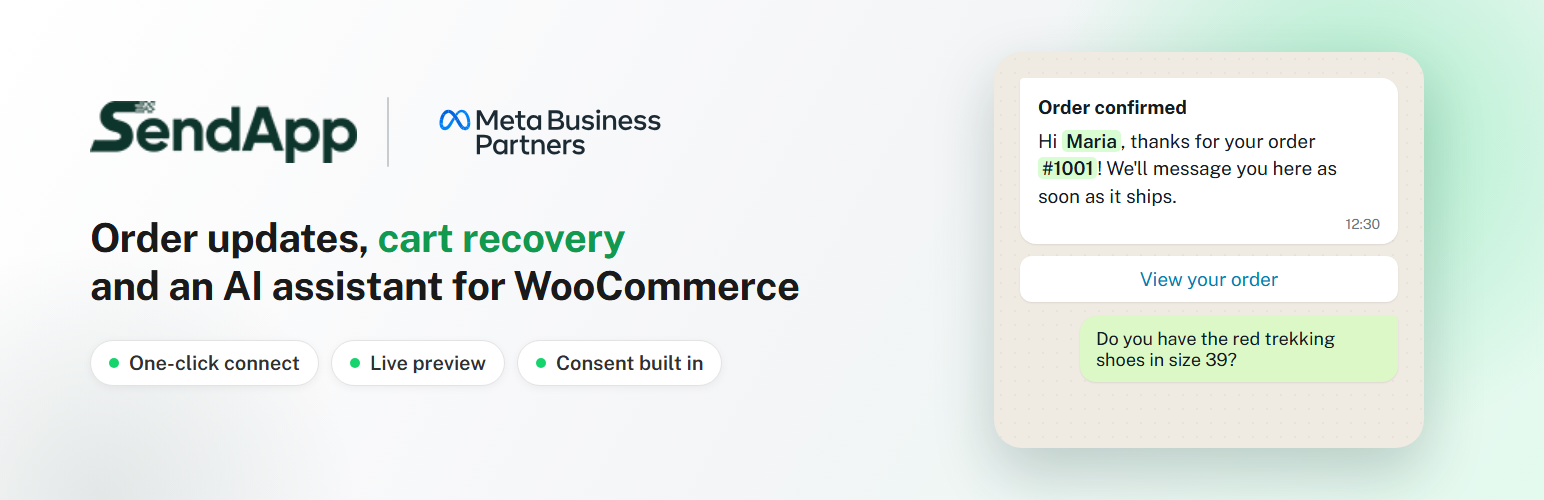

SendApp
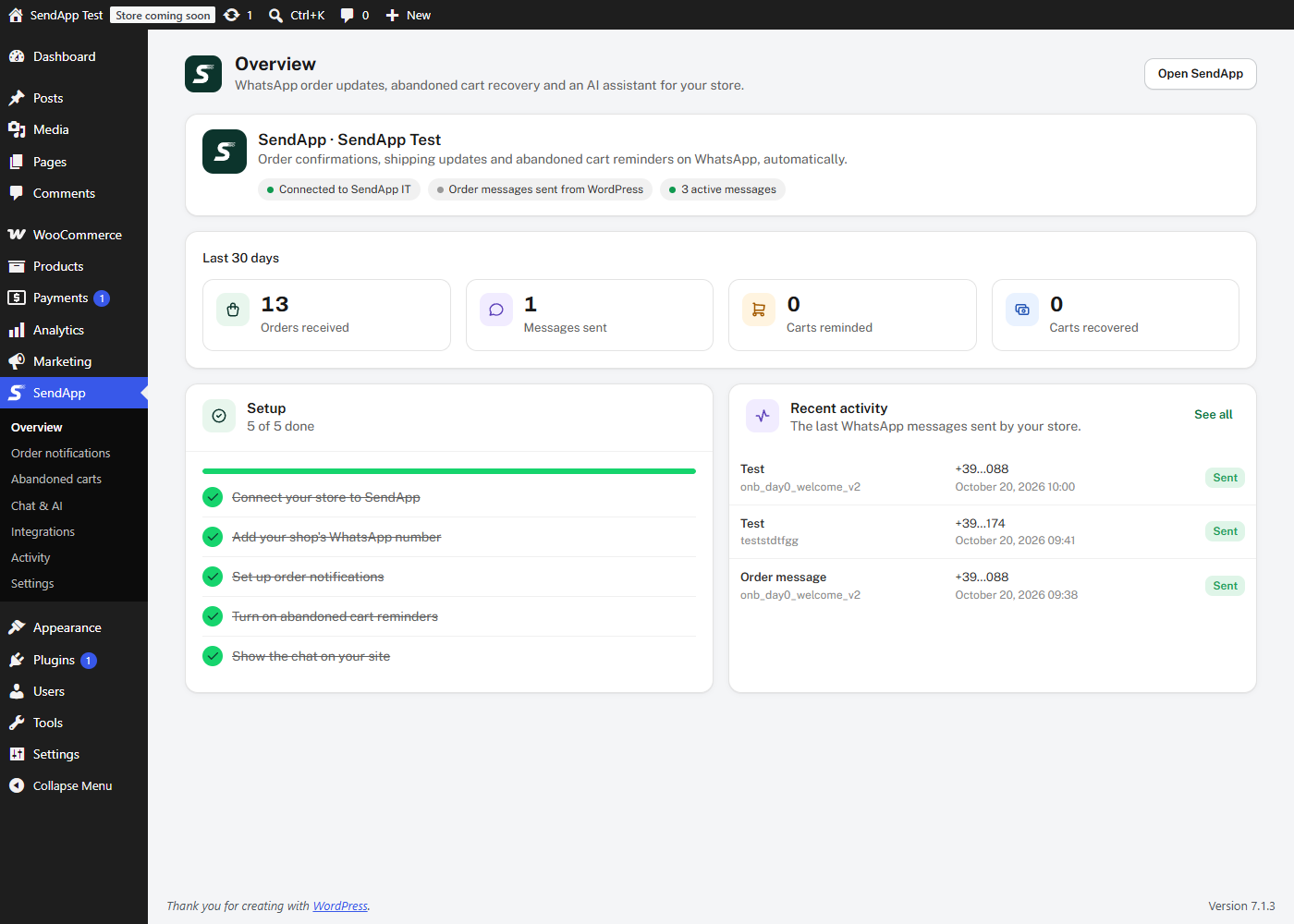
Turn every WordPress event into an instant WhatsApp message. SendApp connects your website to the official SendApp WhatsApp Business API and automatically sends approved WhatsApp template messages when something happens on your site — a WooCommerce order changes status, a cart is abandoned, a form is submitted, a booking is confirmed, a subscription renews, a course is completed, and much more.
WhatsApp is the most used messaging app in the world, with message open rates far higher than email or SMS. Reach your customers where they actually read.
Demo | What is SendApp? | Support
With SendApp you can:
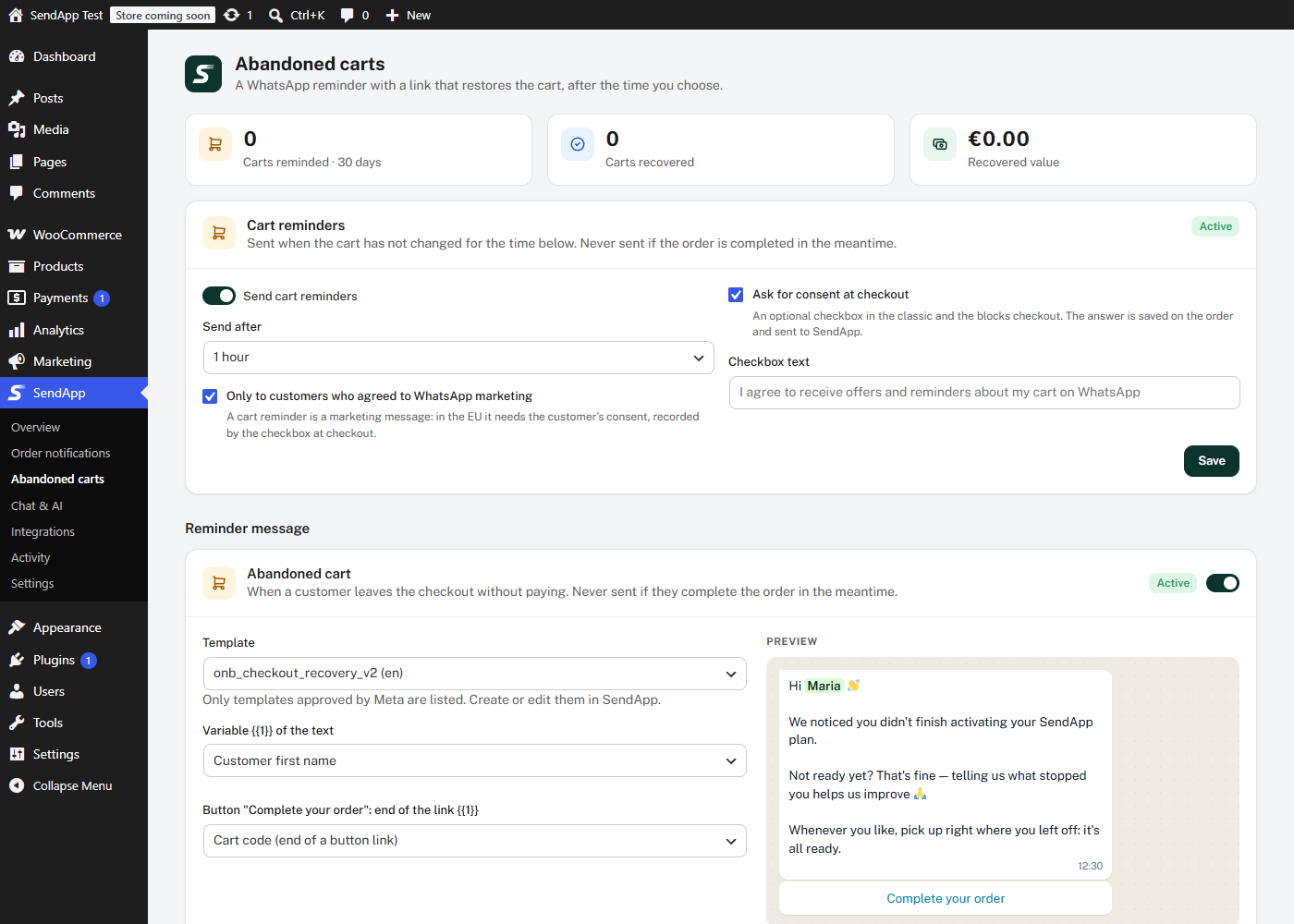
- 🛒 Recover abandoned carts — automatically remind customers on WhatsApp to complete their purchase
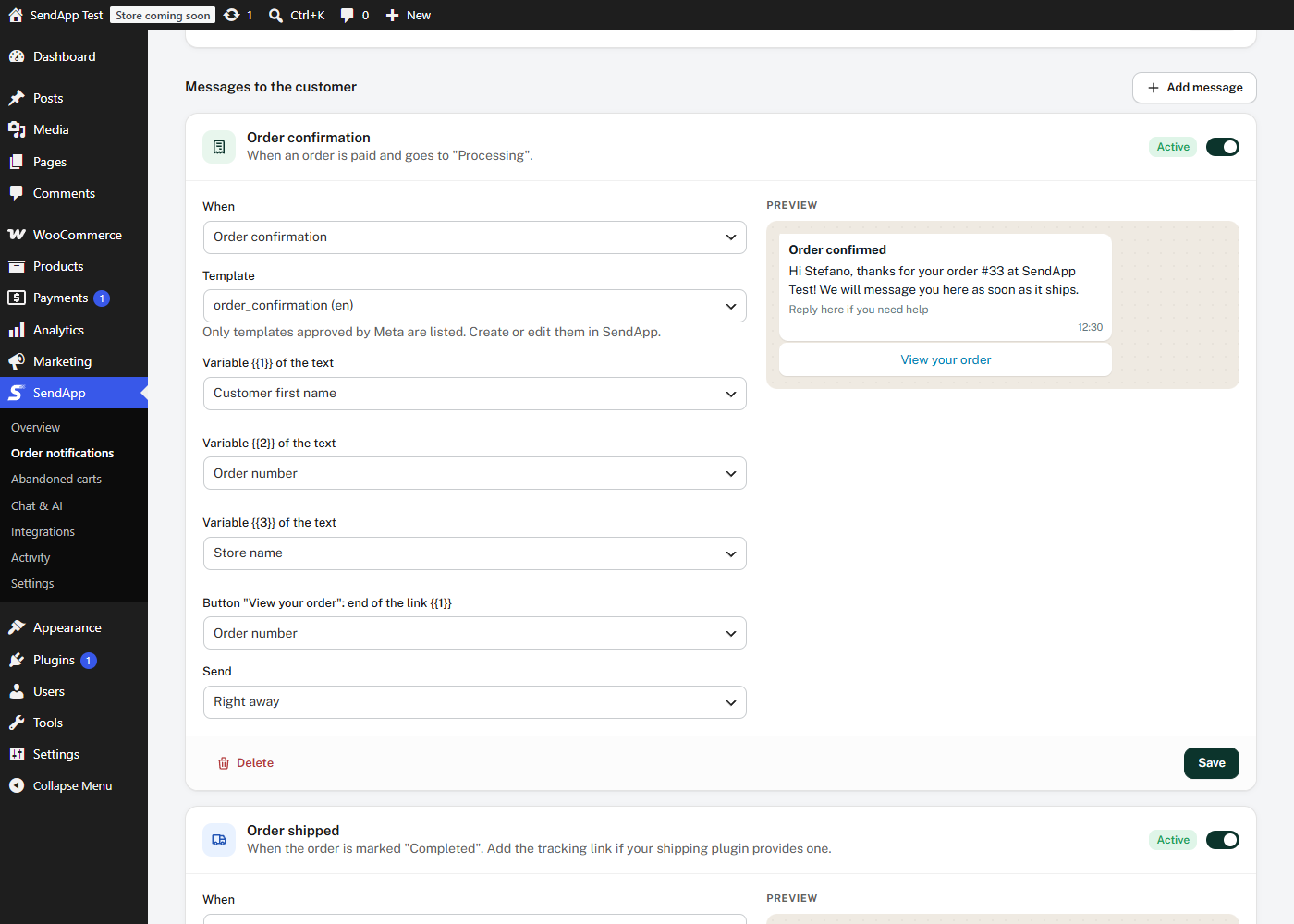
- 💬 Send WooCommerce order notifications — order confirmed, processing, completed, shipped… straight to the customer’s WhatsApp
- 🔔 Notify your business — get an alert on your own WhatsApp number when an order or event happens
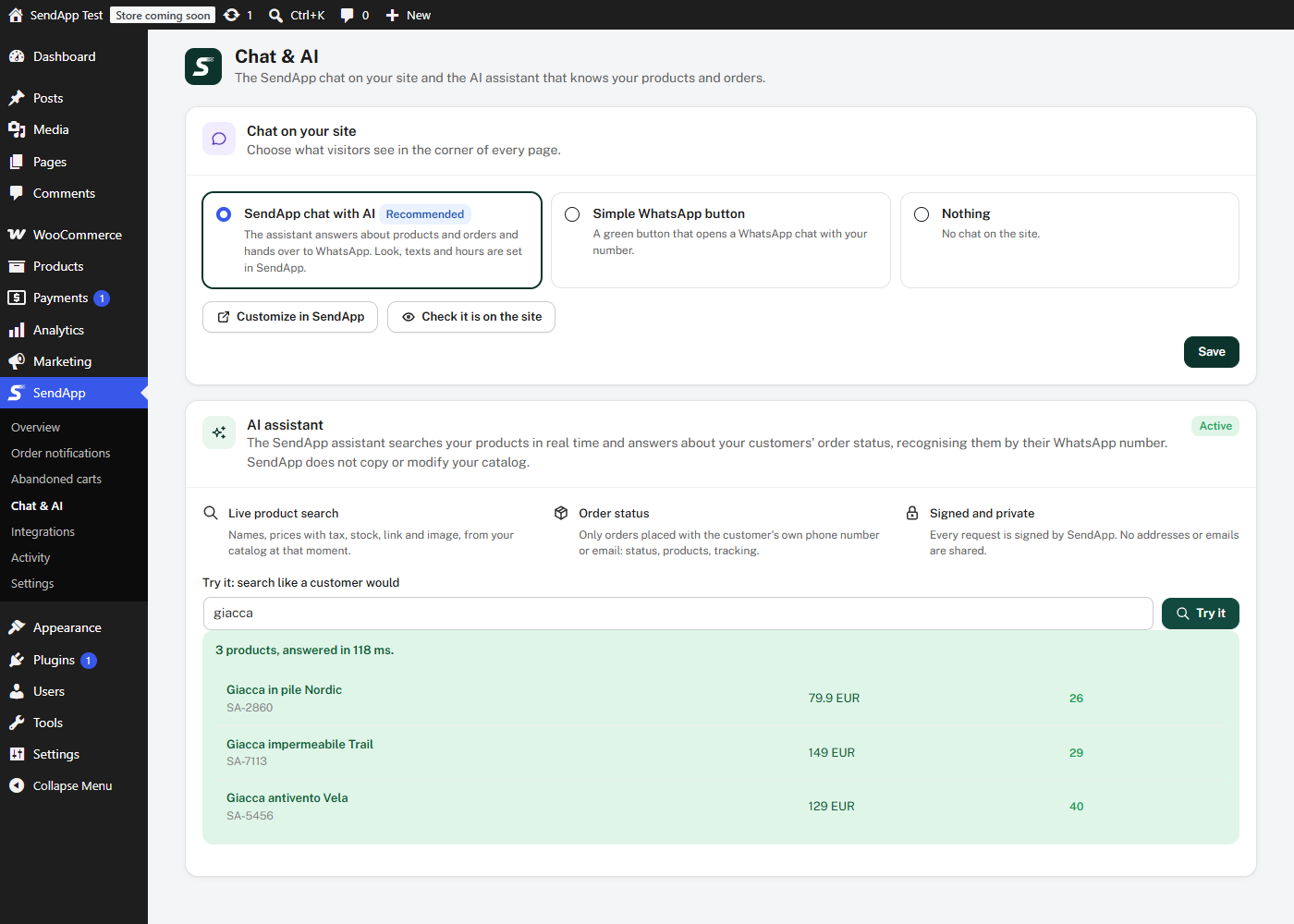
- 💬 Add a floating WhatsApp chat button — let visitors start a chat with a single tap
- 🧩 Connect 25+ plugins — WooCommerce, WPForms, Elementor Pro, LMS, memberships, bookings, marketplaces, CRM and more
- 🌍 Send multilingual messages — localized in 6 languages (en, de, es, fr, it, pt)
Why merchants choose SendApp
- Reach message open rates far higher than email or SMS
- Recover lost revenue from abandoned carts
- Communicate directly and instantly on the channel your customers prefer
- No account activation fees
- Ready in minutes — connect your account and start sending
🛒 Abandoned cart recovery
When a customer adds products to the cart but doesn’t check out, SendApp tags the cart as abandoned after a configurable wait time and sends an automatic WhatsApp reminder — with a checkout link — to help them complete the order.
💬 WooCommerce order notifications
Send automatic WhatsApp updates on every order status change, to the customer and/or to your own business phone, with an optional delay (e.g. X days after a status). Every message can include your store name, the order number, tracking info and a support contact.
🧩 Works with 25+ plugins (SendApp Events)
Each integration activates automatically only when its host plugin is installed — no errors, no overhead:
- Store & subscriptions: WooCommerce, WooCommerce Subscriptions, WooCommerce Bookings, Easy Digital Downloads
- Forms: WPForms, Elementor Pro, Contact Form 7, Gravity Forms, Fluent Forms, Forminator
- Learning & memberships: LearnDash, LifterLMS, Tutor LMS, MemberPress, Paid Memberships Pro
- Bookings & events: Amelia, Bookly, Booknetic, Salon Booking System, The Events Calendar
- Marketplaces, CRM & community: Dokan, WCFM, FluentCRM, Groundhogg, BuddyPress / BuddyBoss, bbPress
- Shipping, tracking & jobs: WooCommerce Shipment Tracking, Advanced Shipment Tracking, WP Job Manager
📝 Form notifications (SendApp Forms)
Fire a WhatsApp message on form submission and map form fields to your template variables — native support for WPForms (free + Pro) and Elementor Pro Forms.
💬 Floating WhatsApp chat widget
Add a click-to-chat WhatsApp button to your site so visitors can reach you in one tap, or embed the SendApp Agent chat snippet.
🧪 Test & track everything
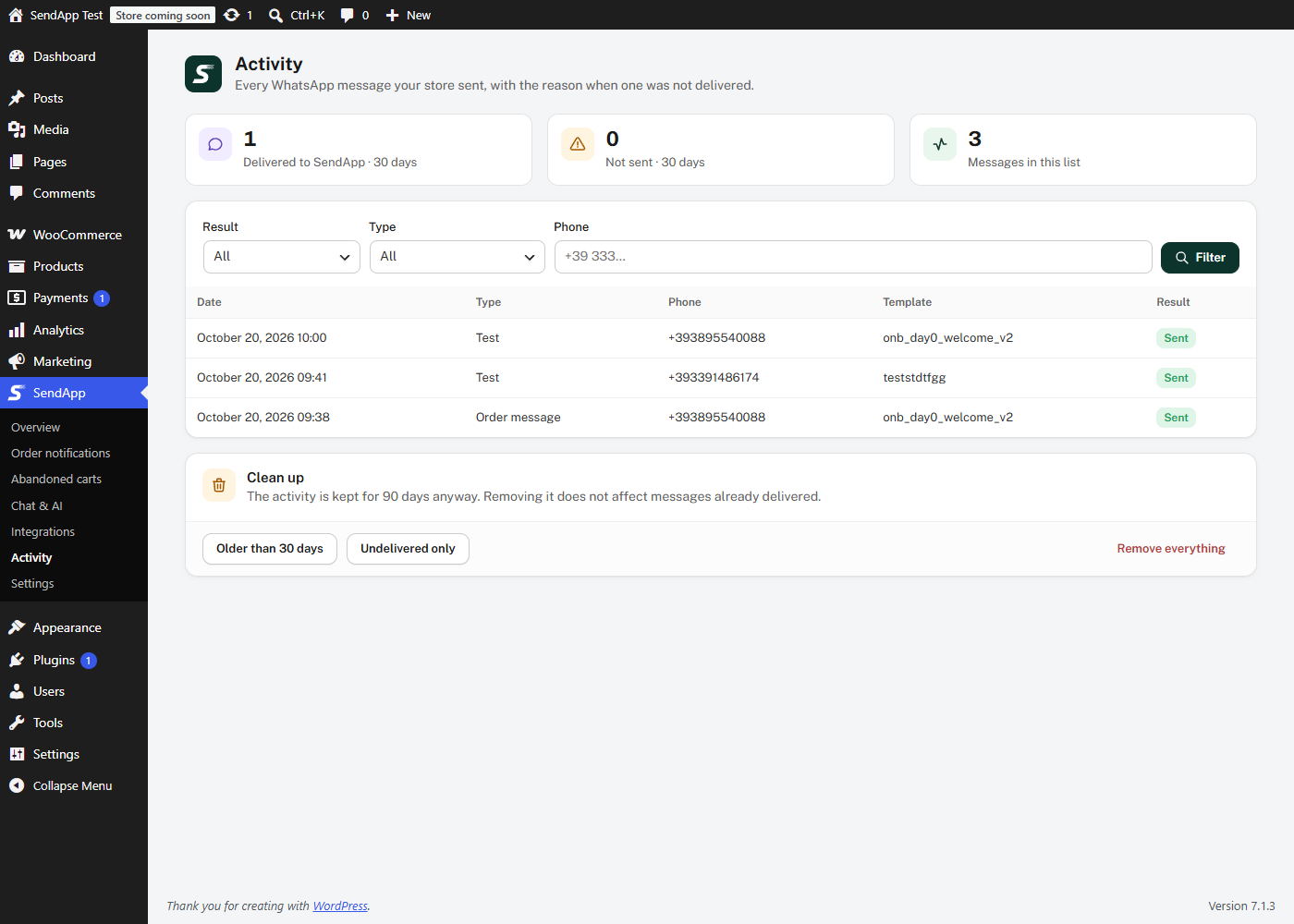
Validate your API and templates with the built-in Test Send card, and review every message in the structured Send Log — status, HTTP code and response — filterable and purgeable from the admin.
⚙️ Two providers, one interface
Choose between SendApp Official and SendApp Agent in Settings API. Same template pipeline, same admin UI — pick per account.
Getting started
- Install and activate the plugin.
- Go to SendApp Settings API and paste your API key.
- Configure your Triggers, Notifications, Forms and Events.
- Send a test message and go live!
Outbound WhatsApp messages use Meta-approved WhatsApp Business templates, created from your SendApp account dashboard.
External services
This plugin connects to the SendApp Business API and the SendApp Agent service to send WhatsApp messages, fetch the merchant’s approved WhatsApp templates and verify API credentials. Connections happen ONLY when:
- the merchant saves API settings (key verification)
- the merchant clicks “Send Test” in Settings General
- a configured trigger / notification / event handler fires
Endpoints contacted:
https://official.sendapp.cloud/api/verify— credential verification (GET)https://official.sendapp.cloud/api/templates— list approved templates (GET, paginated)https://official.sendapp.cloud/api/send/template— send a template message (POST)https://app.sendapp.ai/api/whatsapp-meta/get_templates— Agent provider templates (GET)https://app.sendapp.ai/api/whatsapp-meta/send— Agent provider message send (POST)
Data sent: the recipient phone number, the chosen template name, the template variable values (which may include order/customer/form-submission data depending on the configured trigger), the API key (and Account Token if Agent provider).
Service terms of use:
- SendApp Official: https://sendapp.live/terms-and-conditions/
- SendApp Agent (app.sendapp.ai): https://sendapp.live/terms-and-conditions/
Privacy policy of the service: https://sendapp.live/it/privacy-policy-sendapp-whatsapp/
When the optional “SendApp Agent” widget mode is enabled, the merchant pastes a snippet from app.sendapp.ai/apps/widget/script/XXXX which loads a JavaScript chat widget from app.sendapp.ai directly in the front-end. The plugin extracts and stores only the URL portion (no arbitrary HTML) and enqueues it via wp_enqueue_script().
When the “Send Test” card is used with a template whose header is a media (image/video/document) AND the merchant has not configured a “Header Media URL” mapping, the plugin uses a public placeholder image hosted at https://sendapp.live/wp-content/uploads/sendapp-test.jpg as the test media. This URL is sent as part of the template payload to the SendApp API — the plugin itself does not download it, but the SendApp / Meta endpoint may fetch it server-side at delivery time. Real production sends always use the merchant-configured media URL, never this placeholder.
Privacy
- No personal data is collected, stored or transmitted by the plugin to any third party other than the SendApp Business API (see “External services” above).
- The send log table (
{prefix}sendapp_send_log) keeps a record of every send attempt for debugging and auditing. Phone numbers and template names are stored; the response body excerpt may contain reflected customer data depending on the configured template. The merchant can purge entries (all / older than 30 days / failed only) from SendApp Send Log. - When a configured trigger fires, the data sent to the SendApp API includes the customer’s phone number and any template variable values resolved from the order / form / event payload (typically: name, order id, total, tracking URL).
- The plugin does NOT load any third-party tracker, analytics script or remote font.
Details
Related plugins
Plugins that also contain the tag automation
OttoKit: All-in-One Automation Platform

Zapier for WordPress

Uncanny Automator – Easy Automation, Integration, Webhooks & Workflow Builder Plugin

MailerLite – WooCommerce integration

WP Webhooks – Automate repetitive tasks by creating powerful automation workflows directly within WordPress

Thrive Automator


About
Plugin for that tries to help you find the WordPress plugin you are looking for.
| Please enjoy an image of Crush (this awesome turtle) and have a lovely day! |  |
We do not own any plugin listed on this site and do not work for or work with WordPress.com or it's associated companies. We simply provide a searchable list of the available WordPress plugins.