

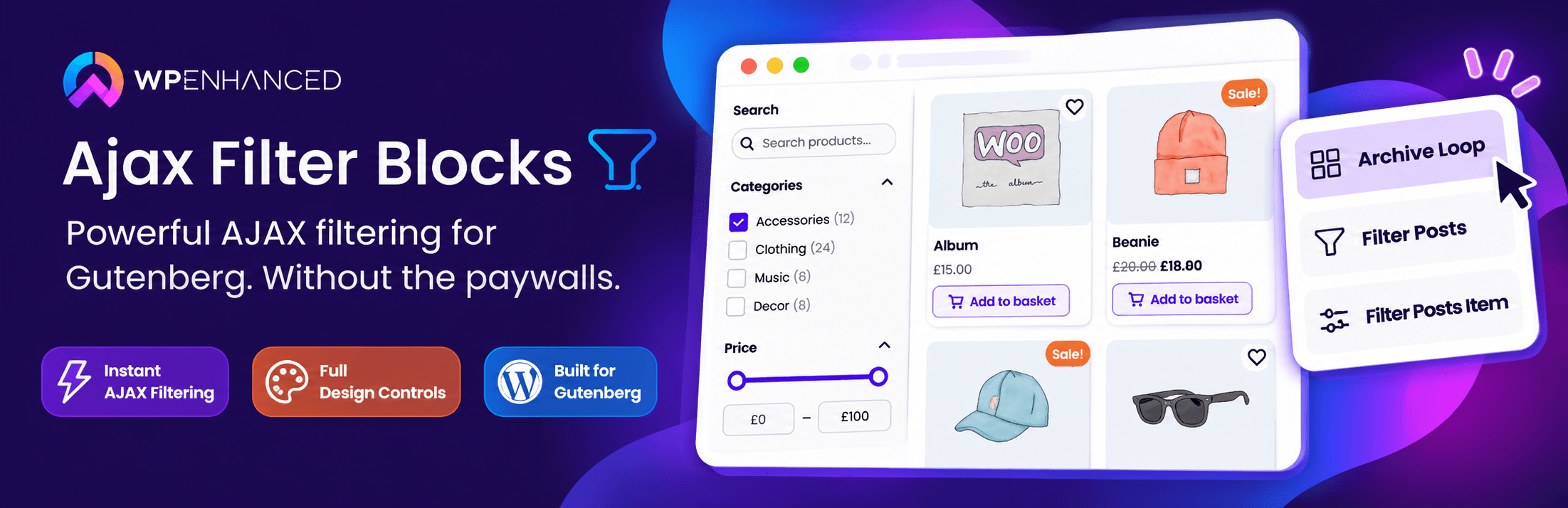

WPEnhanced Ajax Filter Blocks
Free by design. Powerful by default.
WPEnhanced Ajax Filter Blocks is an AJAX filter plugin for the WordPress block editor. Build filterable blogs, shops, directories, and listing pages where results update instantly—without a full page reload.
Most filter plugins lock the useful bits behind Pro. This one is built the other way around: the free version is intended to be the full product for most websites. Design controls, multiple filter types, AJAX results, custom fields, WooCommerce support, and custom post types are all included—no essential features paywalled.
Whether you run a WooCommerce store, a content-heavy blog, or a custom post type directory, you can create a modern faceted filtering experience using only blocks. No shortcode soup. No theme lock-in.
Why site owners love it
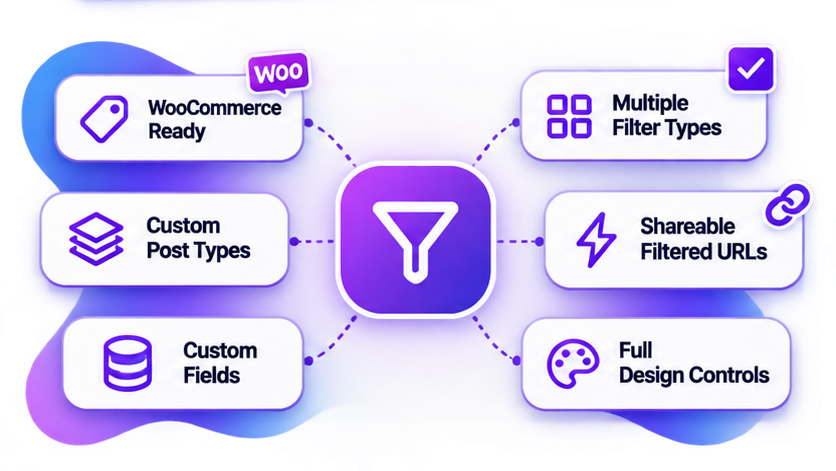
- Free by design – Built so most websites never need to upgrade
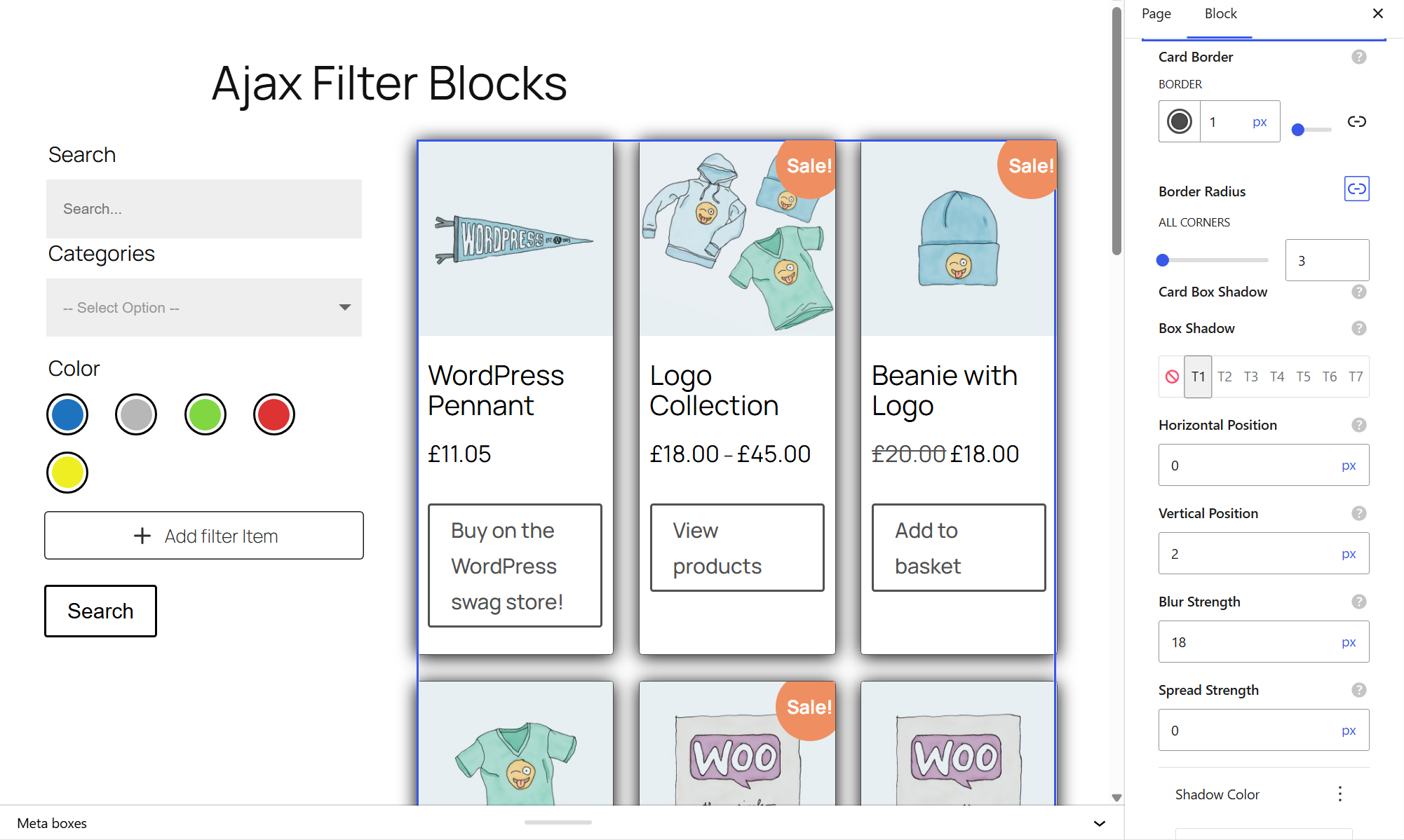
- Full design controls – Style filters and loops in the editor without paywalls
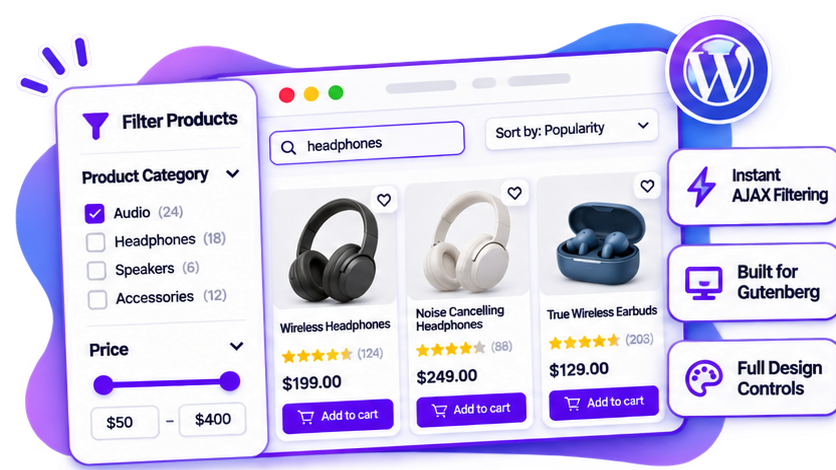
- Instant AJAX filtering – Results update without a full page reload
- Built for Gutenberg – Native blocks for filters and archive loops
- Works beyond blogs – Posts, WooCommerce products, and any public custom post type
- Flexible filter types – Checkboxes, dropdowns, radios, ranges, search, and more
- Custom field ready – ACF-compatible filtering (including Secure Custom Fields / SCF)
- Shop-ready – Categories, tags, attributes, price-style ranges, and more
- Shareable filtered URLs – Visitors can bookmark or share filtered views
The three blocks
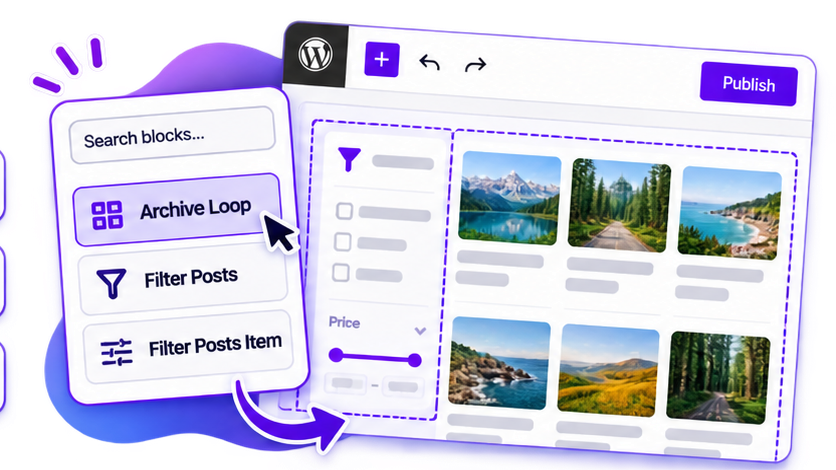
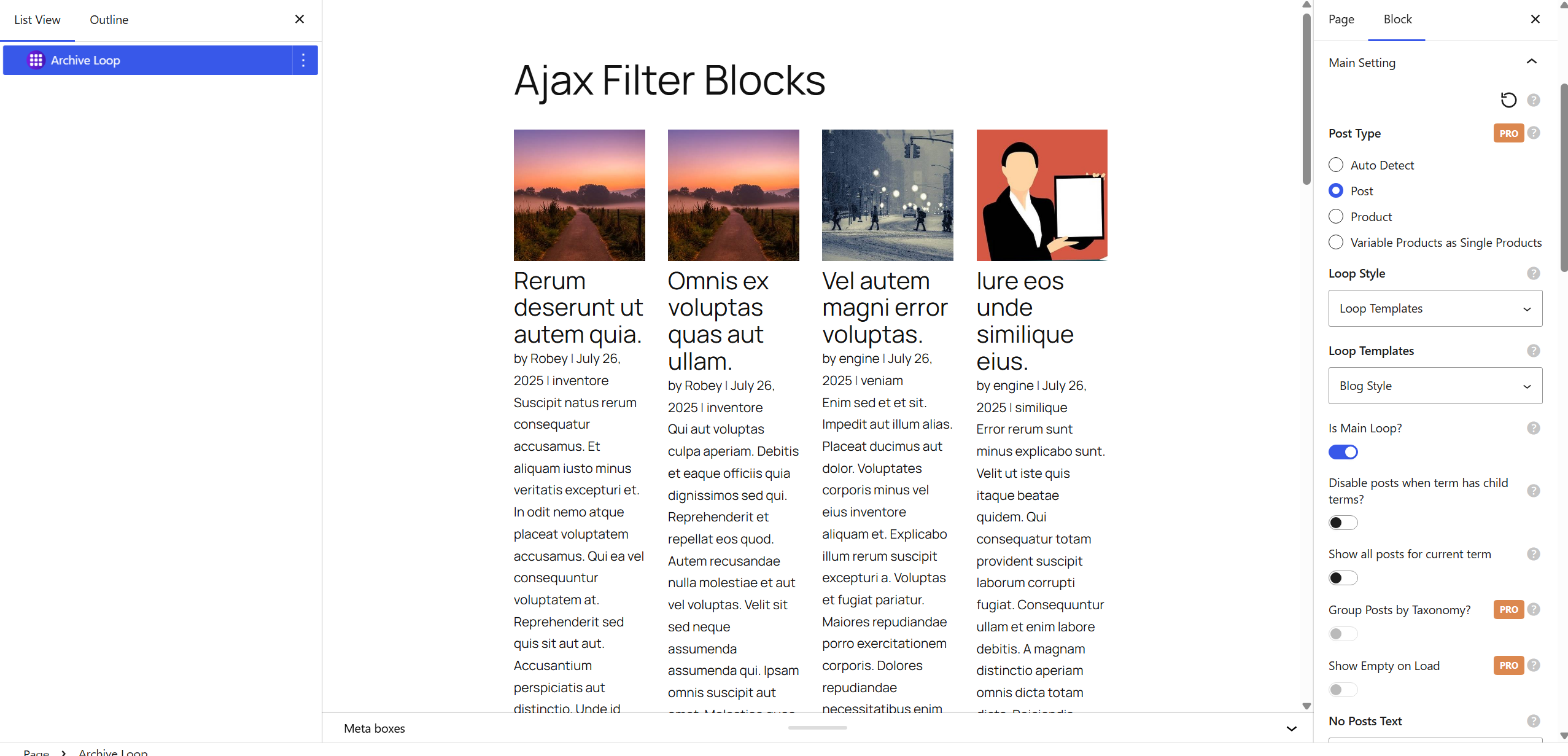
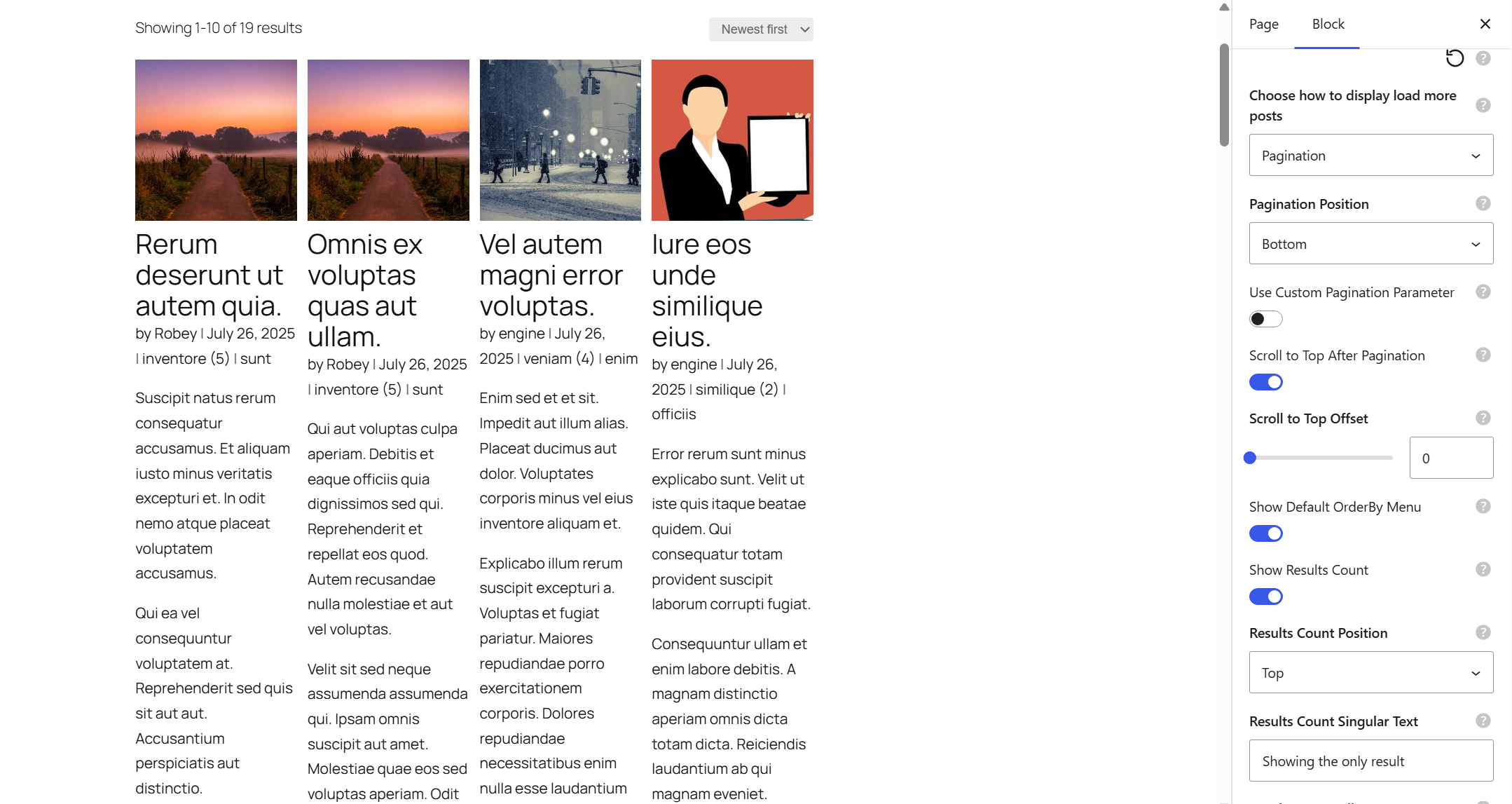
- Archive Loop – Display posts, products, or custom post types in a grid, list, or masonry layout with pagination or load more
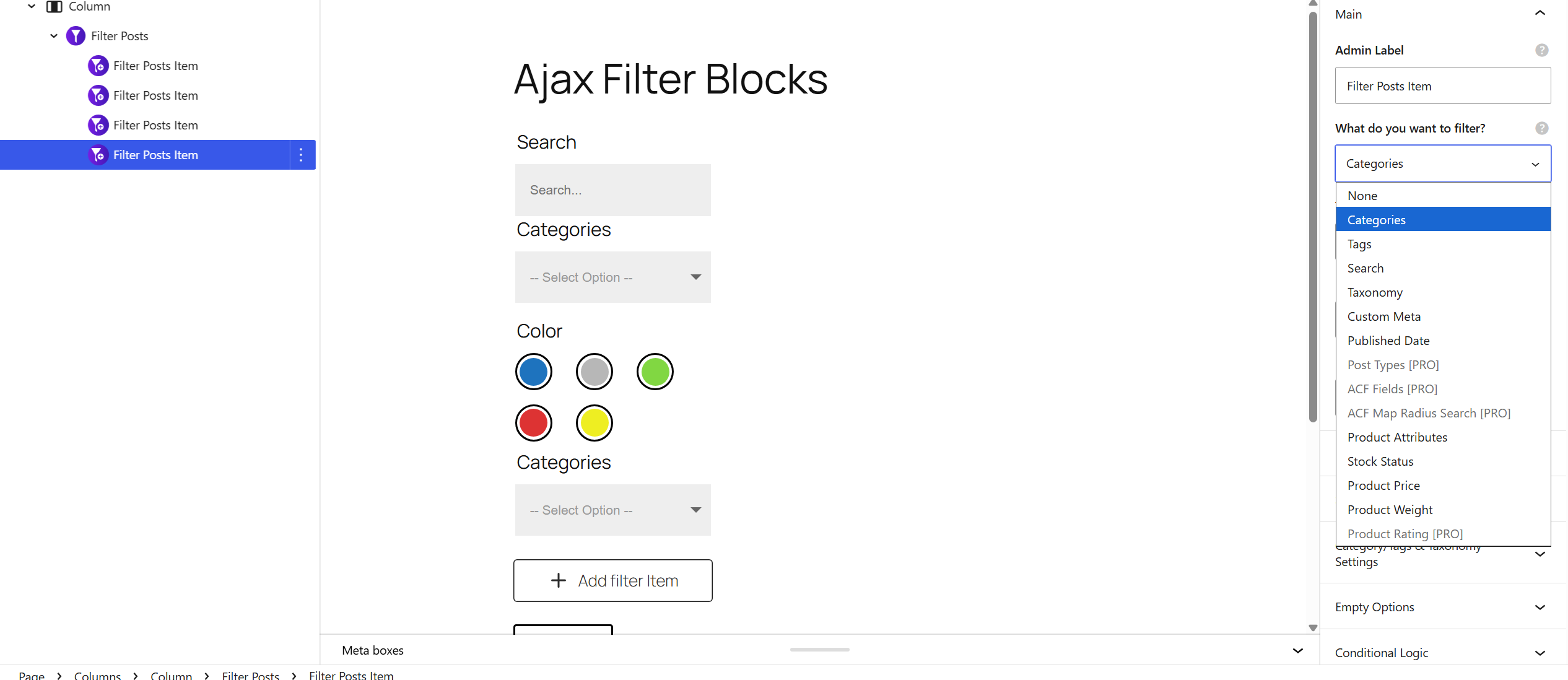
- Filter Posts – The filter panel visitors interact with (sidebar, top bar, accordion, mobile toggle, and more)
- Filter Posts Item – Each individual filter control inside Filter Posts (taxonomy, search, custom field, attribute, range, and similar)
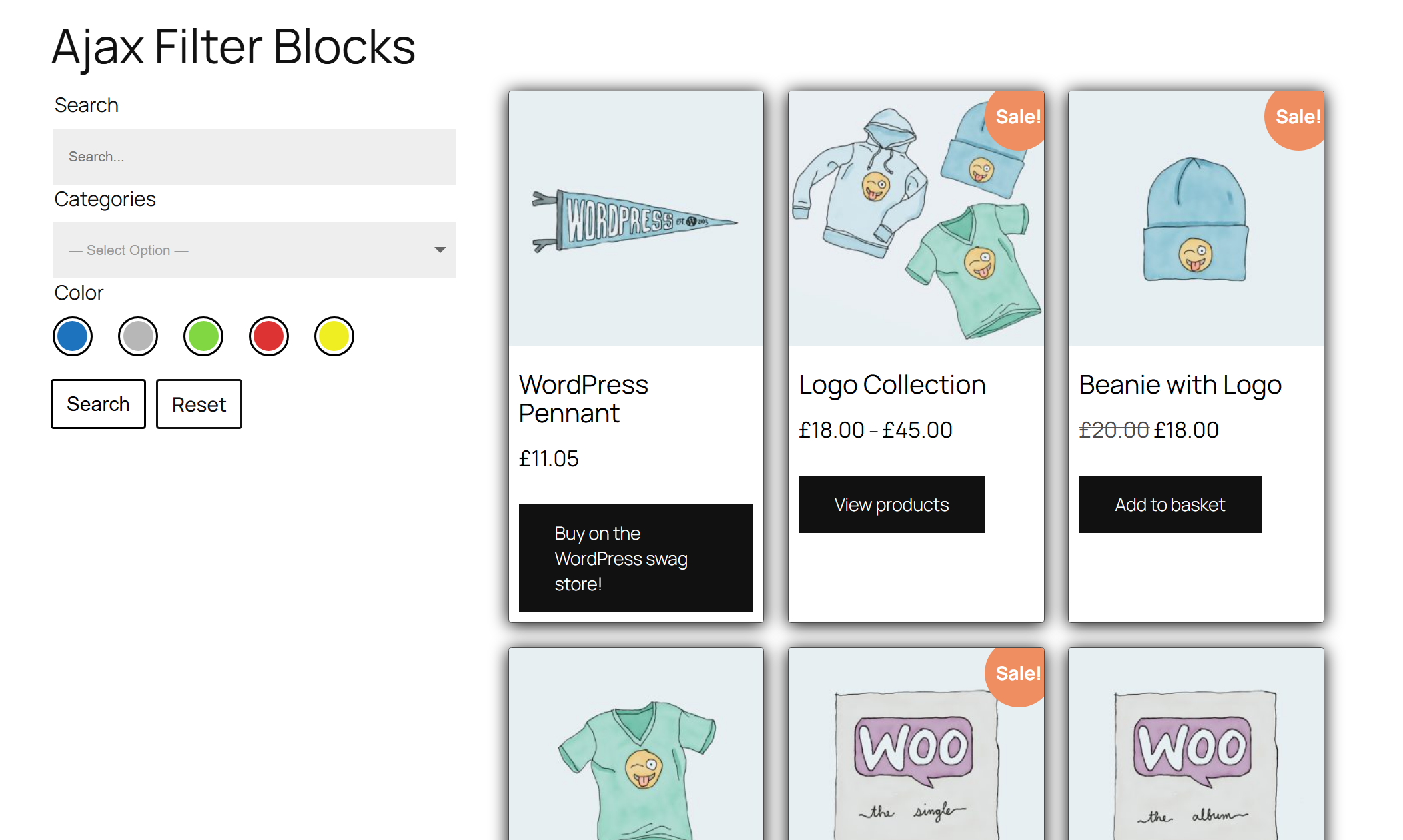
Put them together and you get a complete filterable archive—built in the editor, running live on the front end.
Perfect for
- WooCommerce product catalogs and shop filters
- Blog archives filtered by category, tag, or keyword
- Directories and membership listing sites
- Portfolios filtered by project type or skill
- Real estate or inventory listings with custom fields and taxonomies
- Resource libraries and knowledge bases with faceted browsing
How filtering works
Filtering uses the WordPress REST API. When a visitor changes a filter, only the loop results refresh—keeping the rest of the page in place. Optional URL parameters keep filtered views shareable and bookmarkable.
Get started in minutes
- Install and activate the plugin
- Add an Archive Loop block to your page
- Add a Filter Posts block and place Filter Posts Item controls inside it
- Choose what to filter by (categories, tags, taxonomies, custom fields, product attributes, and more)
- Publish and test live AJAX filtering on the front end
Need help? Visit WP Enhanced for documentation and support.
Optional map & location features
When enabled, map and radius filtering can use Google Maps / Geocoding or OpenStreetMap Nominatim. See External services below for details.
Free vs Pro
This free plugin includes the features and design controls most websites need to build great AJAX filters.
A separate Pro add-on exists only for specialist / advanced scenarios—such as advanced catalog indexing (built-in index, Typesense, Cloud Index, Elasticsearch) and Auto Suggest phrase indexing. Those options are not required for normal filtering. Settings may mention them for discoverability. Filtering in this free plugin uses the standard WordPress query path.
Want Catalog Index, Auto Suggest, and advanced Pro controls? Upgrade to Ajax Filter Blocks Pro.
External services
This plugin connects to third-party services when map and location filtering features are used.
-
Google Maps JavaScript API
Used to render interactive maps in Archive Loop map mode.
Data sent: API key and standard browser request data when the map script is loaded on pages using map mode.
Terms: https://cloud.google.com/maps-platform/terms
Privacy policy: https://policies.google.com/privacy -
Google Geocoding API
Used to convert entered addresses into coordinates for radius-based filtering.
Data sent: address text entered for filtering and API key when geocoding is requested.
Terms: https://cloud.google.com/maps-platform/terms
Privacy policy: https://policies.google.com/privacy -
OpenStreetMap Nominatim
Used as a geocoding fallback when needed.
Data sent: address text entered for filtering when fallback geocoding is used.
Terms: https://operations.osmfoundation.org/policies/nominatim/
Privacy policy: https://wiki.osmfoundation.org/wiki/Privacy_Policy -
WP Enhanced InstantSearch (search.wpenhanced.com)
Used only in the admin settings screen to power in-plugin documentation search.
Data sent: the search query text typed by a site administrator in settings.
Terms: https://wpenhanced.com/terms-conditions/
Privacy policy: https://wpenhanced.com/privacy-policy/
Advanced catalog indexing (built-in index, Typesense, Cloud Index, Elasticsearch) and Auto Suggest phrase indexing are provided by a separate Pro add-on and are not included in this free plugin. Settings may mention those Pro features for discoverability only. Filtering in this free plugin uses the standard WordPress query path.
Source code and development
Human-readable source for the JavaScript and CSS shipped in this plugin (including minified files such as js/divi-filter.min.js, assets under includes/settings/dist/, and bundled code under blocks/build/) is maintained in this public repository:
https://github.com/wpenhancedltd/wpenhanced-ajax-filter-blocks-source
Clone that repository to review, study, or rebuild the compiled assets. It contains the same src/, blocks/src/, and includes/settings/src/ trees plus the package.json files and build configuration needed to run the toolchain.
Build tools: Install Node.js (an active LTS release such as v18 or v20 is recommended). From the root of that repository:
- Run
npm installthennpm run build:assetsto rebuild the main frontend JavaScript and CSS (webpack writes underjs/andcss/at the root of that repository; copy into the full plugin tree if you integrate that way). - In the
blocksdirectory, runnpm installthennpm run build(output:blocks/build/). - In the
includes/settingsdirectory, runnpm installthennpm run build(output:includes/settings/dist/).
Run npm install in each directory before its build command. The public repository’s README describes which folders to sync from the main plugin project when publishing updates. Some third-party scripts in the distributed plugin may ship minified only; original sources are available from those projects’ upstream distributions.
Details


Related plugins
Plugins that also contain the tag ajax-filter
HUSKY – Products Filter Professional for WooCommerce

Filter Everything — Product Filter & WordPress Filter

Post Grid Gutenberg Blocks for News, Magazines, Blog Websites – PostX

Category AJAX Filter – Advanced Filter for Posts & Custom Post Types

annasta Filters for WooCommerce

Eventful for Elementor – Events Showcase For The Events Calendar


About
Plugin for that tries to help you find the WordPress plugin you are looking for.
| Please enjoy an image of Crush (this awesome turtle) and have a lovely day! |  |
We do not own any plugin listed on this site and do not work for or work with WordPress.com or it's associated companies. We simply provide a searchable list of the available WordPress plugins.